Blog · 
30 October 2026
 · 
8 min read

Virtual Power Plants: Can Your Battery Earn You Money?

What a virtual power plant is, how retailers control your battery, what Queensland VPP offers have paid, and the questions to ask before you sign up.

Home battery mounted on the exterior wall of a Brisbane house

You have just had a home battery installed, or you are thinking about one, and the offers start rolling in. "Join our virtual power plant and earn up to hundreds of dollars a year." "Get a $200 sign-up credit." "Let your battery work for you."

It sounds like free money. Sometimes it is a genuinely good deal. Sometimes the fine print means you are handing over control of an expensive asset for not much in return.

Here is a straight guide to what a virtual power plant (VPP) is, how it controls your battery, what Queensland offers looked like at the time of writing, and the questions to ask before you sign up.

What is a virtual power plant?

A virtual power plant pools thousands of household batteries (and sometimes solar systems) into a network that a provider can manage remotely. Individually, your battery is small. Combined with thousands of others, it can act like a power station, pushing energy into the grid when demand is high or soaking up excess solar when there is too much.

The provider is usually an electricity retailer, such as AGL or Origin, or a specialist aggregator. In return for some control over your battery, they pay you, typically through bill credits, a sign-up bonus, payments per kWh during events, or a share of wholesale market earnings.

How the provider controls your battery

When you join a VPP, your battery and inverter connect to the provider's software over the internet. Most of the time, your battery does what it normally does: stores your daytime solar and powers your home in the evening.

A few times a year, or more often on some plans, the provider runs an event. That might mean:

  • Discharging your battery into the grid during a price spike or a supply shortfall, often on a hot summer evening.
  • Charging your battery from the grid when prices are low or negative, ready for a peak later.
  • Holding charge in reserve so it is available when the grid needs it.

Most plans keep a minimum reserve in your battery, often around 20%, so you are not left completely empty. But during an event, the energy you might have used that evening could go to the grid instead. That is the trade-off.

Home battery and solar inverter mounted on a wall
In a VPP, your battery still powers your home most of the time, but the provider can call on it during events.

What do Queensland VPPs actually pay?

There is no single figure, and anyone promising a guaranteed amount is overselling it. Payments depend on the plan, your battery size, how many events are called, and whether you are on a plan linked to wholesale prices. Here is what some providers were offering in Queensland in the second half of 2026, as published by the providers and independent comparison sites. These offers change often, so check the current terms before you sign.

  • AGL (Bring Your Own Battery VPP): AGL's VPP page lists a $200 welcome credit, $80 a year paid as $20 each quarter, and $1 per kWh your battery charges or discharges during VPP events, capped at 250 kWh a year. AGL keeps up to 20% in your battery.
  • Origin Loop with Battery Lite: CHOICE's review lists a $200 sign-on credit and $1 per kWh discharged during events, capped at 200 kWh in any 12-month period, which is up to about $200 a year in event credits. Origin aims to leave about 20% in your battery.
  • Diamond Energy (WATTBANK): SolarQuotes' VPP comparison lists an annual credit of $250 to $450 plus a battery usage credit for evening and overnight exports, for selected battery brands, available in the Energex area.
  • Amber: rather than fixed credits, Amber passes through wholesale prices, which can mean bigger earnings in volatile periods but also more risk. SolarQuotes lists a monthly subscription for this service.
  • GloBird (ZEROHERO): rewards households for exporting in the evening and keeping their own evening imports low, rather than paying a flat VPP fee.

Put together, the fixed-credit plans above work out to somewhere around a couple of hundred dollars in the first year including the sign-up credit, and less in later years once that one-off bonus is gone. Wholesale-linked plans can be higher or lower depending on the market. Independent estimates for VPP earnings generally land in the low hundreds of dollars a year, not thousands.

Quick tip: Compare the whole electricity plan, not just the VPP credit. A generous VPP bonus attached to higher usage rates or a lower feed-in tariff can leave you worse off overall.

The Cheaper Home Batteries Program and "VPP-ready"

If you are getting a battery through the federal Cheaper Home Batteries Program, the Clean Energy Regulator requires grid-connected batteries to be technically capable of participating in a virtual power plant. If the battery connects to an existing hybrid inverter, that inverter must also be VPP-capable.

That does not mean you have to join one. The requirement is about the equipment being ready, not about signing up. Joining is your choice.

Remember too that the discount steps down. It falls from 1 January 2027 and keeps stepping down every six months until the end of 2030. Our guide on the battery discount drop explains what that means in dollars, and the Clean Energy Regulator's Cheaper Home Batteries page has the official detail.
The pros and cons

The upside

  • Extra value from your battery. Credits and sign-up bonuses can shave a bit more off your payback period.
  • Little effort. Once set up, most VPPs run in the background.
  • Helping the grid. Batteries working together can ease strain on the grid at peak times, such as hot summer evenings.

The downside

  • Less control. During an event, energy you stored for your own evening may go to the grid, and you could end up buying power back at peak rates.
  • Less backup when you might want it. Events are often called when demand is high, and Brisbane's storm season runs through the same hot months. If backup matters to you, check the reserve level.
  • Retailer lock-in. Many VPPs require you to buy your electricity from that retailer, and their rates may not be the best for your usage.
  • Battery wear and warranty questions. Extra cycling adds wear. Check whether VPP participation affects your battery warranty, especially warranties that limit total energy throughput.
  • Brand compatibility. Not every VPP works with every battery.
  • Data. Providers collect real-time data from your system. It is worth knowing how it is used.
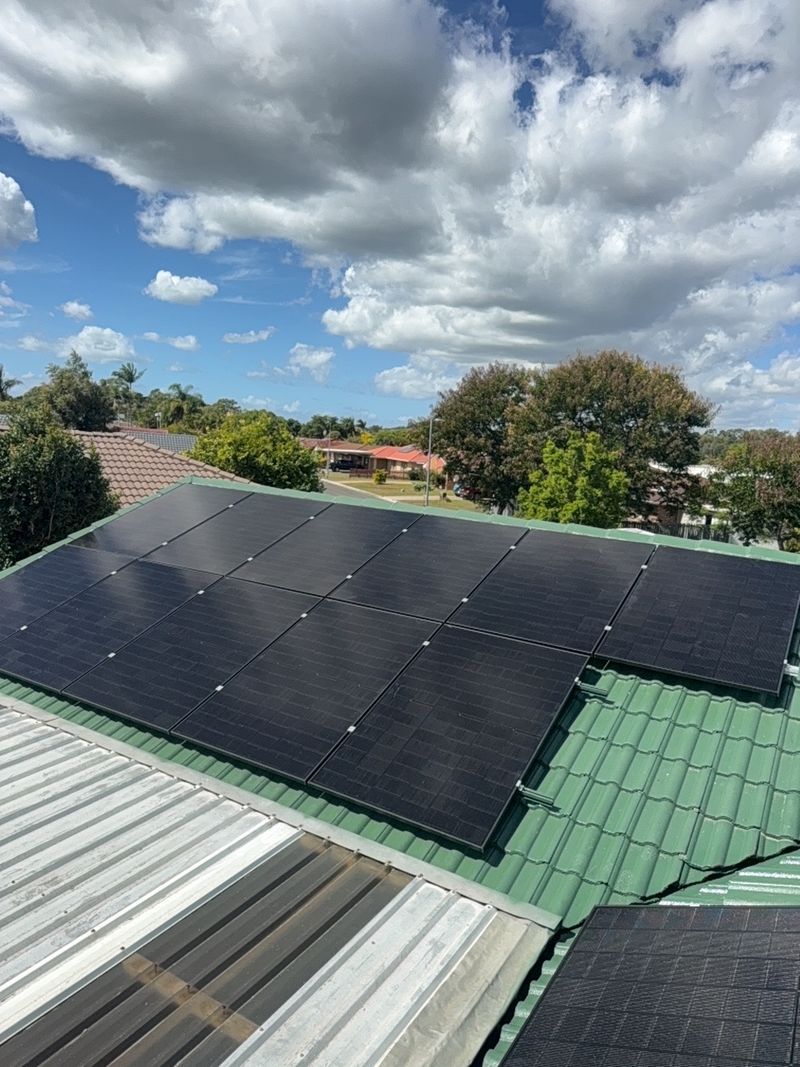
Brisbane home with solar panels on the roof
Your solar and battery should be designed around your household first. A VPP is a bonus, not the main reason to buy.

Questions to ask before you join

Before you sign anything, get clear answers to these:

  1. What exactly will I be paid? Sign-up credit, ongoing credits, per-kWh event rates, and any annual caps. What happens to the credits if I leave early?
  2. How often will my battery be used? How many events a year, at what times, and can the provider charge my battery from the grid?
  3. How much reserve is kept? Can I set my own minimum, especially for storm season backup?
  4. Do I have to switch retailer? If so, how do the usage rates, supply charge and feed-in tariff compare with my current plan?
  5. Is there a contract term or exit fee? How much notice do I need to give to leave?
  6. Does it affect my battery warranty? Ask the battery manufacturer, not just the VPP provider.
  7. Is my battery and inverter compatible? And will joining change any settings that affect how my system runs day to day?
  8. How does it fit with other offers? For example, if you are considering a retailer's Solar Sharer plan with free power from 11am to 2pm, check whether you can combine it with the VPP or whether you need to pick one.

Is a VPP right for you?

A VPP tends to suit households that:

  • have a battery large enough to cover their own evening use with some spare,
  • are happy with the retailer offering the VPP, or the VPP does not require switching,
  • do not rely heavily on battery backup during outages, and
  • want to squeeze a bit more value out of their system without much effort.

It may not suit you if your battery is small and fully used every evening, if backup is the main reason you bought it, or if the VPP plan's electricity rates are worse than what you have now.

The most important thing is that your battery is sized for your household first. A VPP should be a bonus on top of a system that already makes sense, not the reason to buy one. Not sure what size you need? Read our guide on what size battery you need, or see realistic ranges in our Brisbane solar and battery pricing guide.

Frequently asked questions

Do I have to join a VPP to get the battery discount?

No. Under the Cheaper Home Batteries Program, the battery must be capable of joining a VPP, but signing up is your choice.

Can I leave a VPP if I change my mind?

Many current offers have no lock-in contract and only require notice, but some include early termination fees or conditions on bonus credits. Check the terms before you join.

Will a VPP drain my battery right before a blackout?

Most plans keep a minimum reserve, often around 20%, but that may not be enough to cover a long outage. If backup matters to you, ask about the reserve level and whether you can raise it.

How much can I really earn?

Based on the offers we looked at, most fixed-credit VPPs pay in the low hundreds of dollars a year, with a one-off sign-up bonus in the first year. Wholesale-linked plans vary more. There is no guaranteed figure.

Get advice before you sign up

Josh is a licensed electrician who designs and installs every battery system himself, so he can tell you whether your battery and inverter are VPP-capable, how much spare capacity you are likely to have, and whether a VPP makes sense for the way your household uses power. Book your free energy assessment.

Josh, licensed electrician and owner of Advance Energy
Questions? Talk directly to Josh
Licensed electrician and owner. Honest advice about what suits your home.

Related

Thank you! Your submission has been received!
Oops! Something went wrong while submitting the form.
Your enquiry goes straight to Josh, a licensed electrician who designs and installs your system.
By submitting, you agree to Advance Energy contacting you about your quote.
Call Josh · 0474 505 395