
Please note: these prices are estimates only
Every home is different, so your price could be higher or lower than the ranges on this page. Many homes need extra work, such as a switchboard upgrade, new racking, tilt frames or a new inverter, and that adds to the cost. Others only need a small, simple upgrade, which costs a lot less.
This guide is general information only. It is not a quote or an offer, and the figures should not be taken at face value. For an accurate price for your home, book a free energy assessment and Josh will give you a proper quote.
Solar & Battery Prices Brisbane 2026
Honest, up-to-date price ranges for solar, home batteries and EV chargers, with what you can expect to save and how long it takes to pay for itself. Every home is different, so use this as a guide, then get a quote built around your bills.
⭐ 5.0 from 46 Google reviews · Prices updated November 2026 · Includes federal discounts
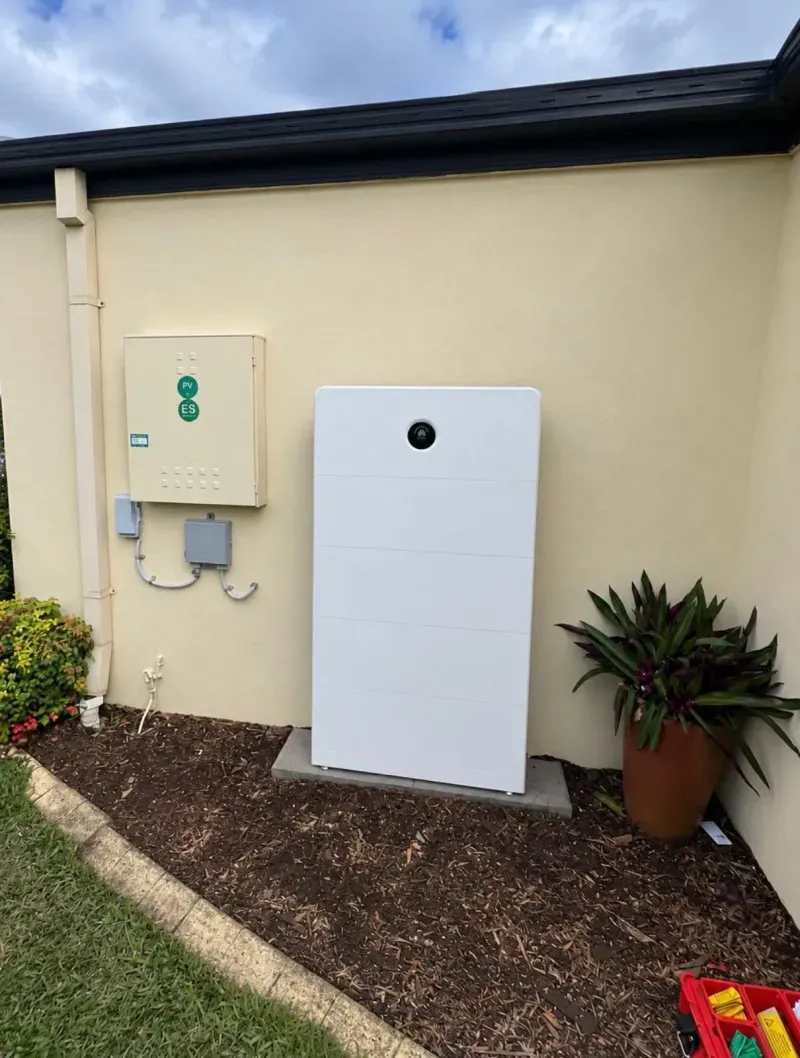
Typical installed prices for Brisbane homes, including GST and the federal solar and battery discounts. Savings are compared with a typical bill on the standard Energex flat-rate plan.
Small home
2 to 3 bedrooms · About 12 kWh a day
Solar only · 6.6 kW
$5,500 to $8,000
Solar + 10 kWh battery
$14,000 to $18,500
Medium home
4 to 5 bedrooms · About 20 kWh a day
Solar only · 10 kW
$8,000 to $11,200
Solar + 13.5 kWh battery
$19,000 to $24,700
Large home
5+ bedrooms · About 30 kWh a day
Solar only · 13 kW
$10,500 to $14,200
Solar + 20 kWh battery
$26,000 to $32,700
Indicative ranges only. Your price depends on your roof, switchboard, equipment choice and how you use power. See how we worked these out below, or put in your own bill with our solar and battery calculator.
Price ranges for a quality installed system after the federal solar discount (STCs), with typical savings for a Brisbane home on the standard flat-rate plan.
| Home size | System | Approx. price installed | Yearly saving | Payback | 30-year savings |
|---|---|---|---|---|---|
| Small home 2 to 3 bedrooms | 6.6 kW | $5,500 to $8,000 | About $910 | 6 to 8 years | About $35,000 |
| Medium home 4 to 5 bedrooms | 10 kW | $8,000 to $11,200 | About $1,440 | 5 to 7 years | About $56,000 |
| Large home 5+ bedrooms | 13 kW | $10,500 to $14,200 | About $2,000 | 5 to 7 years | About $80,000 |
30-year savings allow for one inverter replacement. Solar panels typically carry 25 to 30 year performance warranties.
Battery prices include the federal Cheaper Home Batteries discount at today’s rate. Savings assume solar and a battery together, on an Energex time-of-use plan where the battery covers expensive evening power.
| Home size | Battery size | Battery price installed | Federal discount included | Solar + battery total | Yearly saving | Payback | 30-year savings |
|---|---|---|---|---|---|---|---|
| Small home 2 to 3 bedrooms | 10 kWh | $8,500 to $10,500 | About $2,580 | $14,000 to $18,500 | About $1,550 | 8 to 11 years | About $65,000 |
| Medium home 4 to 5 bedrooms | 13.5 kWh | $11,000 to $13,500 | About $3,460 | $19,000 to $24,700 | About $2,350 | 8 to 10 years | About $98,000 |
| Large home 5+ bedrooms | 20 kWh | $15,500 to $18,500 | About $4,520 | $26,000 to $32,700 | About $3,330 | 7 to 9 years | About $140,000 |
30-year savings allow for one battery replacement (batteries typically last 10 to 15 years) and one inverter replacement. Adding a battery to existing solar typically pays back in around 13 to 15 years on its own.
The federal battery discount drops on 1 January 2027. It reduces every six months until 2030. On a 10 kWh battery, today’s discount of about $2,580 falls to about $2,170 from 1 January. On a 20 kWh battery, it falls from about $4,520 to about $3,800.
If you’re weighing up a battery, it’s worth getting a quote before the end of the year.
Most Brisbane homes suit a single-phase wall charger. Older homes may need a switchboard upgrade first, and we’ll tell you upfront if yours does.
| EV charger installation | Approx. price installed |
|---|---|
| Standard home install (single-phase, about 7 kW charger, short cable run) | $1,100 to $2,300 |
| Install with switchboard upgrade | $1,900 to $4,500 |
| Longer cable runs or trenching to a detached garage | Add $150 to $800 |
These are the things we look at when we put your quote together.
How much power you use, and when, decides the right system size and how much you’ll save. A recent bill tells us most of what we need.
Roof space, direction, pitch, shading and roof type (tile, tin or Klip-Lok) all affect the design and the install.
Older switchboards sometimes need upgrading before solar, a battery or an EV charger can be added safely.
Panel, inverter and battery brands vary in price, warranty and features. We recommend what suits your home, not what pays us the most.
Batteries that keep your home running in an outage need extra wiring and setup.
Your retailer, tariff and feed-in rate change your savings. Batteries usually suit a time-of-use plan best.
These figures are estimates for a typical home, not a quote or a guarantee. Your actual savings will depend on your usage, your roof, your energy plan and future electricity prices.
Most Brisbane homes pay roughly $5,500 to $14,200 for a quality 6.6 kW to 13 kW system, installed, after the federal solar discount (STCs). The right size depends on your roof and how much power you use.
A 10 to 20 kWh home battery typically costs around $8,500 to $18,500 installed, after the federal Cheaper Home Batteries discount. Larger batteries cost less per kWh, but the discount tapers as battery size increases.
For most Brisbane homes, solar on its own pays for itself in roughly 5 to 8 years, then keeps saving for the rest of its 25 to 30 year life.
Adding a battery typically brings payback for the whole system to around 8 to 12 years, and cuts your bill further. It works best for households that use a lot of power in the evening and are on a time-of-use plan. If it won’t pay off for you, we’ll tell you.
Yes. The federal battery discount steps down on 1 January 2027 and keeps reducing every six months. On a 10 kWh battery, the discount drops by roughly $420 from 1 January 2027.

Fill in the form below and attach or email a recent power bill if you have one. You’ll get honest advice and a quote built around how your home actually uses power.
Related