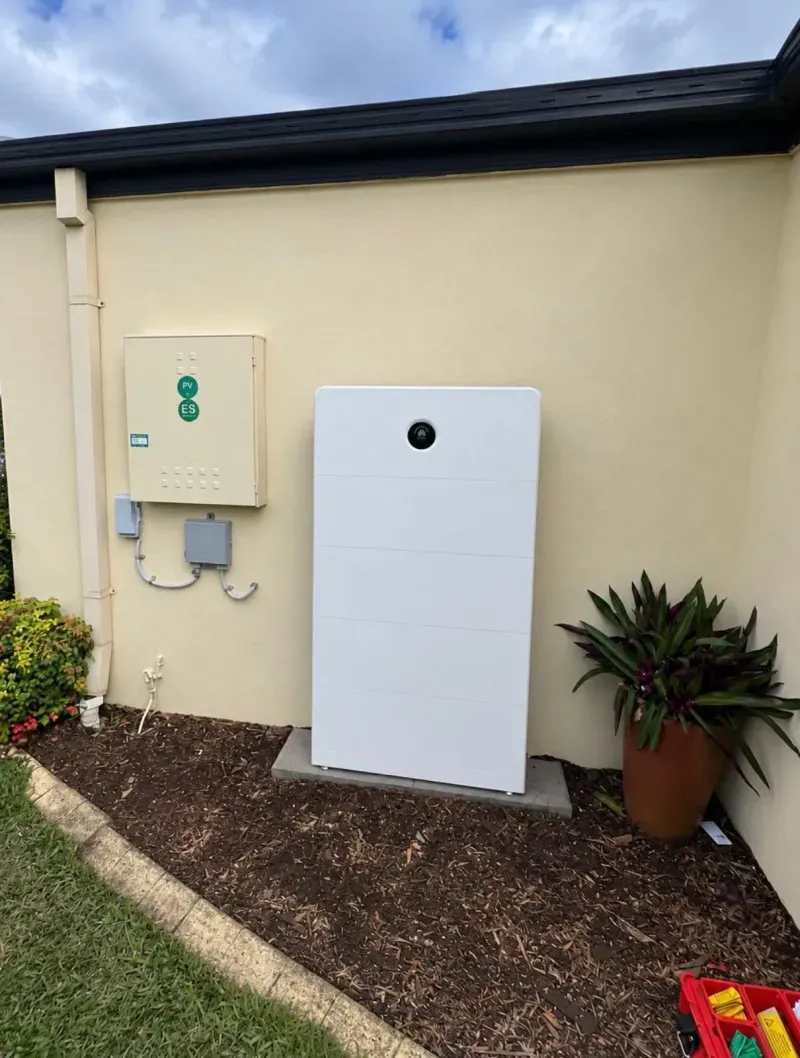
Home batteries have become one of the most common things people ask us about, especially since the federal discount came in. Some households get great value from one. Others would be better off waiting. These five points will help you work out which camp you're in.
1. The right size depends on your usage, not your house
A battery stores excess solar during the day so you can use it in the evening and overnight. The size that suits you depends on how much power you use after the sun goes down, not how many bedrooms you have. Too small and you're still buying expensive evening power. Too big and part of the battery never gets used, which stretches your payback.
We cover this in more detail in how to choose the right battery size.
2. Your existing solar system matters
Most batteries can be added to an existing system, but how depends on your inverter. Some homes need a hybrid inverter, others suit an AC-coupled battery with its own inverter. You also need enough solar to actually fill the battery. A small, older system may not generate enough to charge a large battery and run the house during the day.
3. A battery won't power your home in a blackout unless it's set up to
This surprises a lot of people. Many battery systems shut down during a grid outage unless they're designed and installed with backup. If keeping the lights, fridge, internet or a medical device running matters to you, say so up front. We'll design the system with backup and agree which circuits it covers.
4. There's a federal discount, and it depends on battery size
The federal Cheaper Home Batteries Program reduces the upfront cost of eligible batteries installed with solar. Since May 2026, smaller batteries get a discount of around 30%, and the discount reduces as battery size increases. The scheme is applied through the installer, and the amount changes over time, so we confirm exactly what applies to you in your quote.
Some energy retailers also offer virtual power plant (VPP) plans that can pay you to share your battery with the grid. These suit some households and not others, so it's worth comparing.
5. Payback depends on your tariff and habits
How quickly a battery pays for itself depends on what you pay for evening power, what you get for exporting solar, how much power you use at night and the system you choose. Households with high evening usage and good solar production generally see the strongest return. Anyone promising the same payback for every home isn't looking at your bills.
The quickest way to get a straight answer is to send us a recent power bill. We'll look at your actual usage and tell you honestly whether a battery makes sense now, what size, and what to expect.
Talk to an electrician, not a salesperson
At Advance Energy you deal directly with Josh, the licensed electrician who designs and installs your system. If a battery isn't right for you yet, we'll tell you.