
Power point or wall charger, single or three phase, solar or grid: how to charge an EV at home in Brisbane and what it really costs per 100 km.
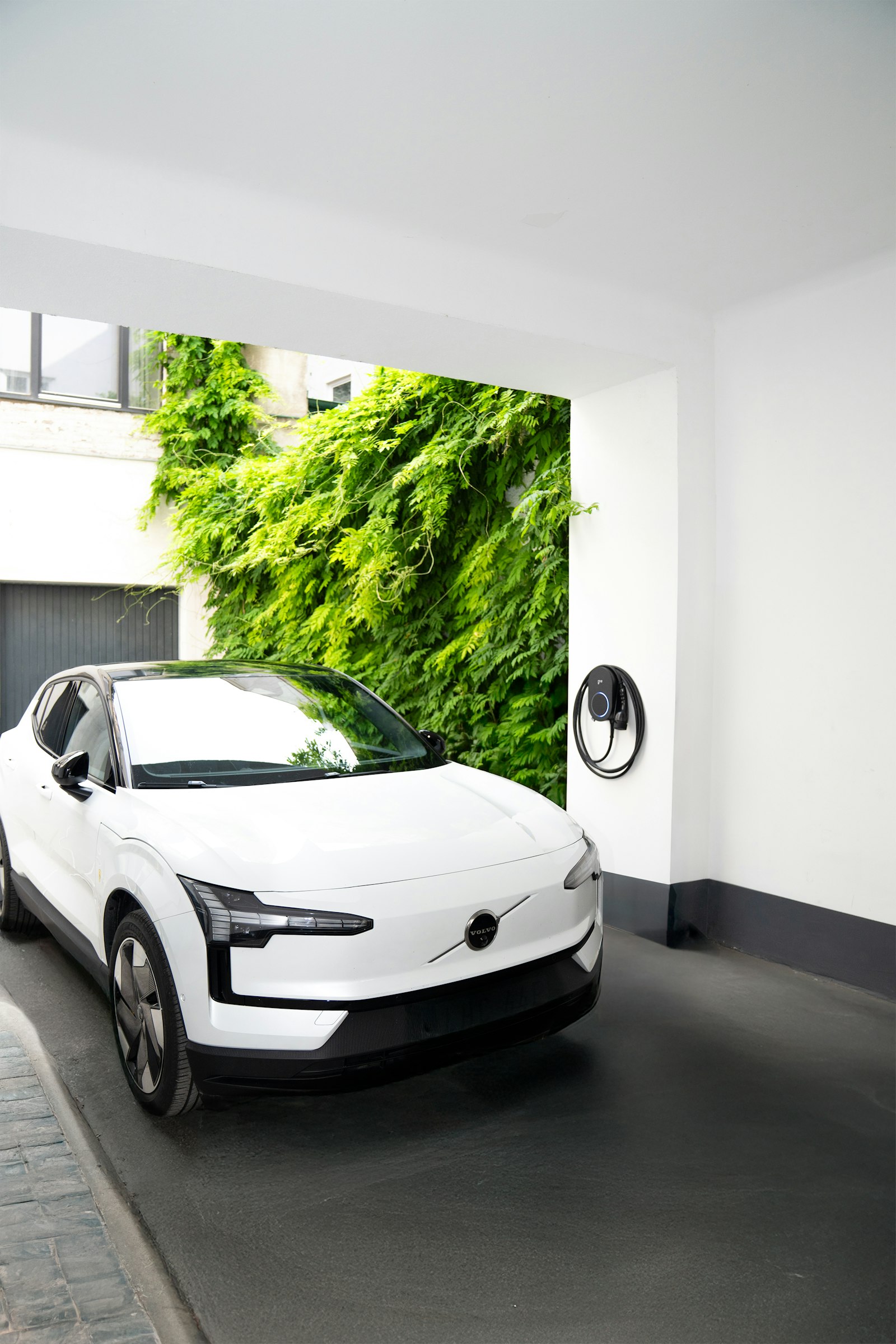
So there is a new EV in the driveway, or one on the shortlist for 2027. The test drive was fun, the salesperson said "you can just plug it into the wall", and now you are standing in the garage looking at a power point and wondering whether that is really the whole plan.
It might be. For some Brisbane households, a normal power point is genuinely enough. For others, a dedicated charger, a smarter tariff or a bit of switchboard work makes a big difference to convenience and running costs.
This guide walks through your home charging options, the Queensland rules that changed recently, how to charge from your own solar, and what it actually costs per 100 km, with the working shown.
Most EVs come with, or can be fitted with, a portable charging cable that plugs into a standard 10 amp power point. This is often called "trickle" or Level 1 charging.
That sounds slow, and it is. But do the maths on your own driving. If you drive about 40 km on a typical day and your car uses 15 to 20 kWh per 100 km, you need around 6 to 8 kWh a day. At 2.4 kW, that is roughly 2.5 to 3.5 hours of charging. Plenty of commuters cover their daily driving overnight on a power point without ever thinking about it.
A few important safety points, though:
Quick tip: If you plan to charge from a power point, ask an electrician to check the circuit first. It is a quick job, and far cheaper than dealing with a melted socket in the garage.
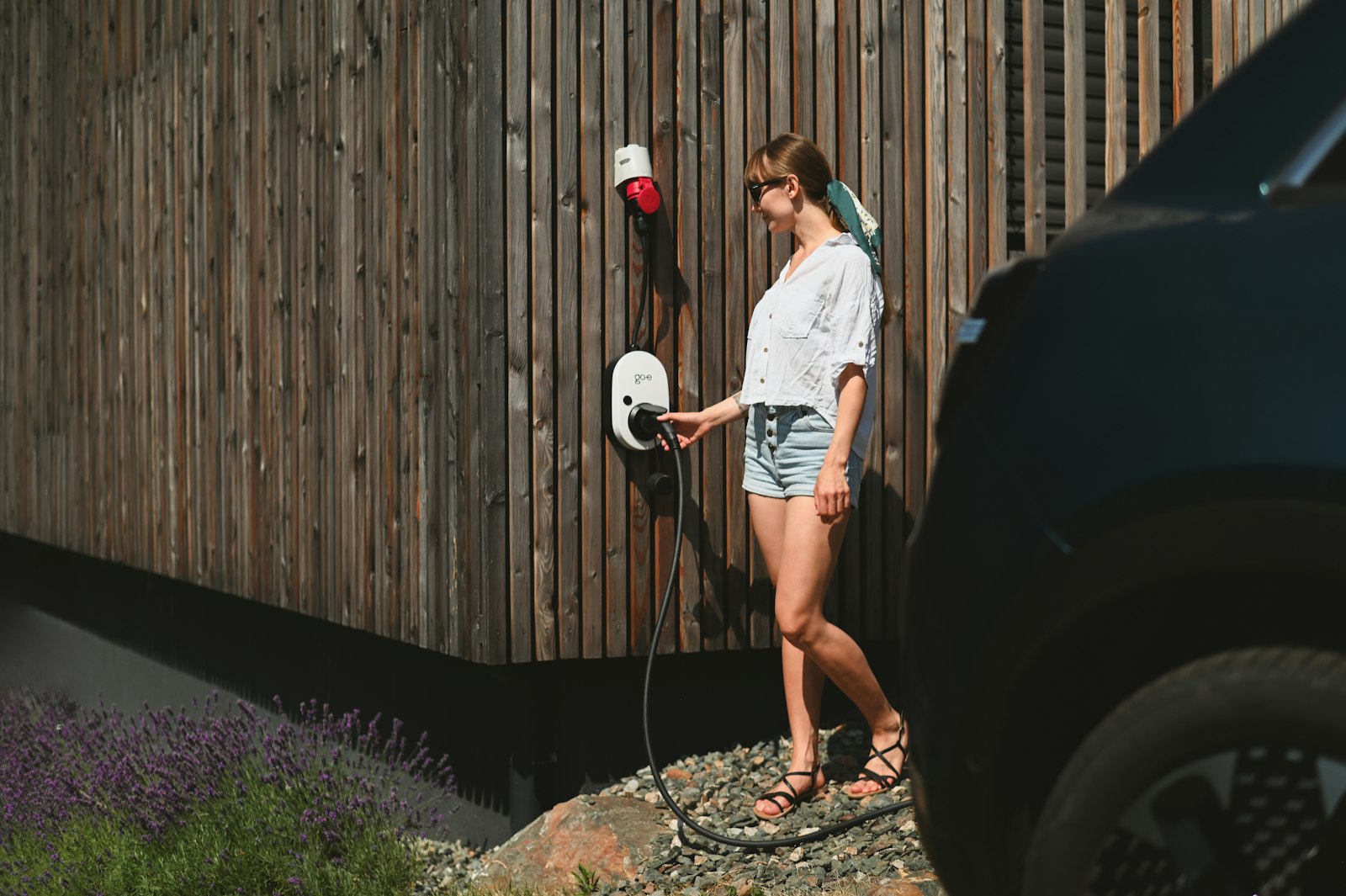
A wall-mounted charger, often called a wallbox or Level 2 charger, is hardwired on its own circuit by a licensed electrician. It is faster, safer for daily heavy use, and usually smarter.
Most Brisbane homes have single-phase power. A single-phase wall charger can supply up to about 7 kW, which adds roughly 40 km of range per hour. That turns an overnight charge from "topping up" into "full by morning" for most cars.
There is good news here for Queensland. Until recently, Energex and Ergon limited single-phase EV chargers to 20 amps (about 4.6 kW) unless the charger was connected to a network-managed device or a controlled load tariff. From 1 October 2026, that 20 amp limit was withdrawn, so single-phase home chargers can run at 32 amps (about 7.4 kW) without a network management device. Maximum demand and phase-balancing requirements still apply, and your electrician will lodge the paperwork with Energex as part of the installation.
If your home has three-phase power, a three-phase charger can deliver up to 22 kW. In practice, though, many EVs can only accept 11 kW of AC charging, so a 22 kW charger will not always charge any faster than an 11 kW one. At 11 kW you are adding roughly 66 km of range per hour.
Not sure what you have? Count the main switches on your switchboard. One usually means single-phase, three usually means three-phase. If you are still unsure, an electrician can confirm it in a minute.
Upgrading from single-phase to three-phase just for an EV is rarely worth it for a typical household. It can involve new cabling from the street and network approval. For most people, a 7 kW single-phase charger is more than enough.
A 7 kW charger running for hours is one of the biggest loads your home will ever have. Before installation, a good electrician will check:
Queensland Fire Department also strongly recommends an interconnected smoke alarm in the area where the vehicle charges, which ties in neatly with Queensland's smoke alarm rules for all homes from 1 January 2027. Our post on the Queensland smoke alarm deadline covers what is required.

If you have solar, charging your car from the roof is about the cheapest fuel you can buy. Every kWh that goes into the car instead of out to the grid saves you what the retailer would have charged you, while costing you only the small feed-in credit you would have earned.
There are a few ways to do it:
The catch is that solar-only charging can be slow, especially with a small system or a busy daytime household. It suits people whose car is at home during the day, such as those working from home or with a second car. If your car is at work from 8am to 6pm, solar charging at home is mostly a weekend thing, unless you add a battery. Our EV charger installation page covers how solar, batteries and chargers can work together.

Here is a twist that surprises many new EV owners in South-East Queensland. On the standard Energex time-of-use tariff, the cheap window is the middle of the day, not overnight:
So if you are on time-of-use, plugging in when you get home at 6pm and charging straight away is the most expensive way to do it. At the very least, schedule charging to start after 9pm. Most EVs and smart chargers let you set this in an app.
Also worth a look is the Solar Sharer Offer. Since 1 July 2026, eligible South-East Queensland households with a smart meter can opt into plans with free usage, up to 24 kWh a day, between 11am and 2pm. If your car is home in the middle of the day, that window could cover a lot of your charging. Some of these plans charge more at other times, so compare on Energy Made Easy using your own usage.
Let us put real numbers on it. EVs typically use about 15 kWh per 100 km for smaller cars and around 20 kWh for larger ones. Cost per 100 km is simply the energy used multiplied by the price per kWh:
How you chargePrice per kWhSmall EV (15 kWh/100 km)Larger EV (20 kWh/100 km)Time-of-use peak (4pm to 9pm)47.79c$7.17$9.56Flat rate27.97c$4.20$5.59Time-of-use shoulder (overnight)25.30c$3.80$5.06Time-of-use off-peak (11am to 4pm)6.98c$1.05$1.40Your own solar (lost feed-in credit)about 3.65c$0.55$0.73
A few notes on the working. Grid prices are the 2026 to 2027 Default Market Offer rates for the Energex area. Your own plan may differ. The solar figure uses the average South-East Queensland residential feed-in offer of about 3.65c per kWh reported by the Queensland Competition Authority for 2024 to 2025, because that is what you give up by using the solar yourself. Real-world costs will be a little higher, because some energy is lost in charging.
For comparison, a petrol car using 7 litres per 100 km at around $1.97 a litre (roughly the Greater Brisbane average RACQ reported in August 2026) costs about $13.79 per 100 km in fuel: 7 x $1.97. Fuel prices move around a lot, so treat that as a ballpark.
The headline: charging in the 4pm to 9pm peak still beats petrol, but charging from solar or in the midday off-peak window can cut your fuel cost per 100 km by roughly 90% or more compared with petrol.
Fewer than there used to be. The Queensland Zero Emission Vehicle Rebate Scheme, which offered up to $6,000 to eligible households, closed on 2 September 2024 when its funding ran out, and there are no plans to reopen it.
What remains at the time of writing is a lower vehicle registration duty rate. Electric and hybrid light vehicles pay $2 per $100 of value up to $100,000, compared with $3 to $4 per $100 for petrol and diesel vehicles, depending on cylinders.
A national road user charge for EVs has been discussed for years, but it was not included in the May 2026 federal budget and no start date has been set. It is worth keeping an eye on, but it is not something you need to plan around today.
If you drive a moderate distance each day and can plug in for several hours, a suitable power point may be enough. A wall charger makes sense if you drive longer distances, have two EVs, want to charge quickly from solar or off-peak windows, or want smart scheduling and load management.
No. Installing a hardwired charger is electrical work, and in Queensland it is illegal for anyone other than a licensed electrician to do it. Your electrician will also handle the Energex paperwork.
You can, but it is usually not the best use of a battery. A 13.5 kWh home battery holds only enough for roughly 70 to 90 km of driving at 15 to 20 kWh per 100 km, and that is before the house gets any. It is generally better to charge the car directly from solar during the day and save the battery for the house in the evening.
Yes. A solar-aware charger can vary its charging rate to follow your surplus solar, and switch to grid power when you need a faster top-up.
Josh is a licensed electrician who designs and installs every EV charger, solar and battery system himself. He will check your switchboard and supply, look at how and when you drive, and recommend a charging setup that suits your car, your solar and your tariff, whether that is a simple circuit check or a smart charger running off your roof. Book your free energy assessment.

Related