
Ceramic fuses, no safety switches, scorch marks or constant tripping? How to tell if your switchboard is outdated, what to know about asbestos, and what an upgrade involves.

Most of us never look at the switchboard until the lights go out. Then you are standing in the dark with a phone torch, staring at a row of switches (or a row of little white ceramic blocks) and wondering which one you are meant to flick.
That box on the side of the house quietly does one of the most important jobs in your home. It splits power into circuits, cuts it off when something goes wrong and, if it is modern enough, protects the people inside from electric shock.
Plenty of Brisbane homes, especially older Queenslanders and post-war brick houses, still have boards that were installed decades ago and never designed for the way we live now. Here is how to tell if yours is due for an upgrade, what to watch out for in older boards, and what the job actually involves.
Your switchboard (sometimes called a fuse box or distribution board) is where the power coming into your home is divided into separate circuits: power points, lights, the stove, the hot water system, air conditioning and so on. Each circuit has a device that protects it.
There are three types of protection you are likely to see, and they do different jobs:
The key point, which Queensland's Electrical Safety Office makes repeatedly, is that fuses and circuit breakers protect the wiring and appliances. Only safety switches are designed to protect people. If your board does not have them, it is doing half the job.

None of these are things you need to open the board to spot. Just look, listen and notice. If anything below sounds familiar, it is worth getting a licensed electrician to have a proper look.
If you open the meter box door and see a row of white ceramic fuse holders rather than switches, your board is from another era. These semi-enclosed rewireable fuses rely on someone fitting the right gauge of fuse wire when one blows. The Electrical Safety Office warns that using fuse wire that is too heavy for the circuit can damage the wiring or start a fire, and over decades of "just pop a bit of wire in", that is exactly what tends to happen.
Safety switches have a button marked "T" or "Test" on the front. If nothing on your board has one, you almost certainly have no shock protection. Safety switches have been compulsory on power point circuits in new Queensland homes since 1992, and on lighting circuits as well since 2000, so if your home is older and has never been upgraded, it may have none at all.
Brown or black marks around a fuse or breaker, melted plastic, or a hot electrical smell near the board are signs that something is overheating. Loose connections and overloaded circuits generate heat, and heat is how electrical fires start. Do not ignore this one.
A healthy switchboard is quiet. Buzzing or crackling can point to a loose connection, arcing or a failing device. If you hear it, keep clear of the board and call an electrician.
The odd trip during a storm is normal. Breakers that trip regularly, or fuses that keep blowing, are telling you something. It may be a faulty appliance, or it may be that the circuit is overloaded because the house now asks far more of it than it was designed for.
Lights that dim when the aircon kicks in, or a tingle when you touch a tap or appliance, are worth taking seriously. The Electrical Safety Office says a tingle or shock is a sign of a serious electrical safety issue. If it comes from a tap, pipe or metal fitting, call Energex straight away.
Electricians often find boards that are physically full, with no space for another circuit or safety switch. That becomes a real problem the moment you want to add something new, which brings us to the next point.
Quick tip: Take a photo of your switchboard with the meter box door open (do not touch anything inside) and send it to your electrician. It tells them a lot about its age and condition before they even arrive.
Modern homes ask a lot more of their electrical system than homes did 30 or 40 years ago. Ducted air conditioning, induction cooktops, pool equipment, home batteries and EV chargers are all big loads, and most of them need their own dedicated circuit and protection on the switchboard.
When you add solar, the system needs its own isolating switches and protection devices on the board. The Electrical Safety Office notes that a switchboard upgrade is not needed in every case, but extra safety switches may be required, and on an older board that can mean an upgrade. Battery installations can also need switchboard work, including the type of safety switch that suits the equipment under current wiring rules.
That is why we always look at the switchboard during a solar or battery assessment. It is far better to know up front than to have a surprise line item halfway through the job. If you are planning an EV, our page on EV charger installation in Brisbane explains what is involved, and our guide to signs it is time to upgrade your solar covers the solar side.

This is the part that deserves care, without panic.
Before 1990, materials containing asbestos were commonly used in Australian meter boards and switchboard panels. Some older panels were made from an asbestos and resin composite, often dark brown or black, and timber meter boxes from that era were sometimes lined with asbestos cement sheeting. Queensland's asbestos safety guidance says that if your home was built or renovated before 1990, it is likely to contain asbestos somewhere, and if you are not sure, you should assume it does.
The good news is that asbestos material that is intact and undisturbed is not a hazard in itself. The risk comes when it is drilled, cut, sanded or broken, which releases fibres into the air. So:
If a board with an asbestos panel needs replacing, it has to be handled with proper safe work procedures, and depending on the material and how much is involved, a licensed asbestos removalist may be required. A good electrician will flag this before quoting, not after.
Quick tip: If your home was built before 1990 and the panel behind your meter or switches is dark, fibrous or looks like old fibro, treat it as asbestos and leave it alone until it has been checked.
Every home is different, but a typical upgrade looks something like this:
One thing worth knowing: the Queensland Government says the wiring, switchboard and meter box are the property owner's responsibility. If your retailer needs to install a new digital meter (for example when you add solar) and the existing meter box is not safe or compliant, you may need electrical work done before the meter can go in.
For more on how we approach this work, see our switchboard upgrades in Brisbane page.
In Queensland it is illegal for anyone other than a licensed electrician to do electrical work, and switchboards are not a place to experiment. What you can do safely is:
If you smell burning, see smoke or sparks, or hear crackling from the board, keep clear and call an electrician. For anything urgent after hours, our 24/7 emergency electrician service is there for exactly that.
Having an older fuse board is not automatically illegal for an owner-occupied home. However, Queensland rules do require safety switches on power point circuits in certain situations, such as when you buy a home or rent one out, and an older fuse board often cannot accommodate them without an upgrade.
Not always. Many homes can add solar with minor changes to the existing board. Older or full boards often need an upgrade so the solar protection devices and any required safety switches can be fitted safely. An electrician can tell you after inspecting it.
Many are completed within a day, but it depends on the size of the house, the condition of the wiring and whether the meter box or asbestos materials need attention. Your electrician should give you a time frame with the quote.
Sometimes safety switches can be added to an existing board if it has the space and is in good condition. If the board is very old, full or contains asbestos, a full replacement is often the safer and more practical option.
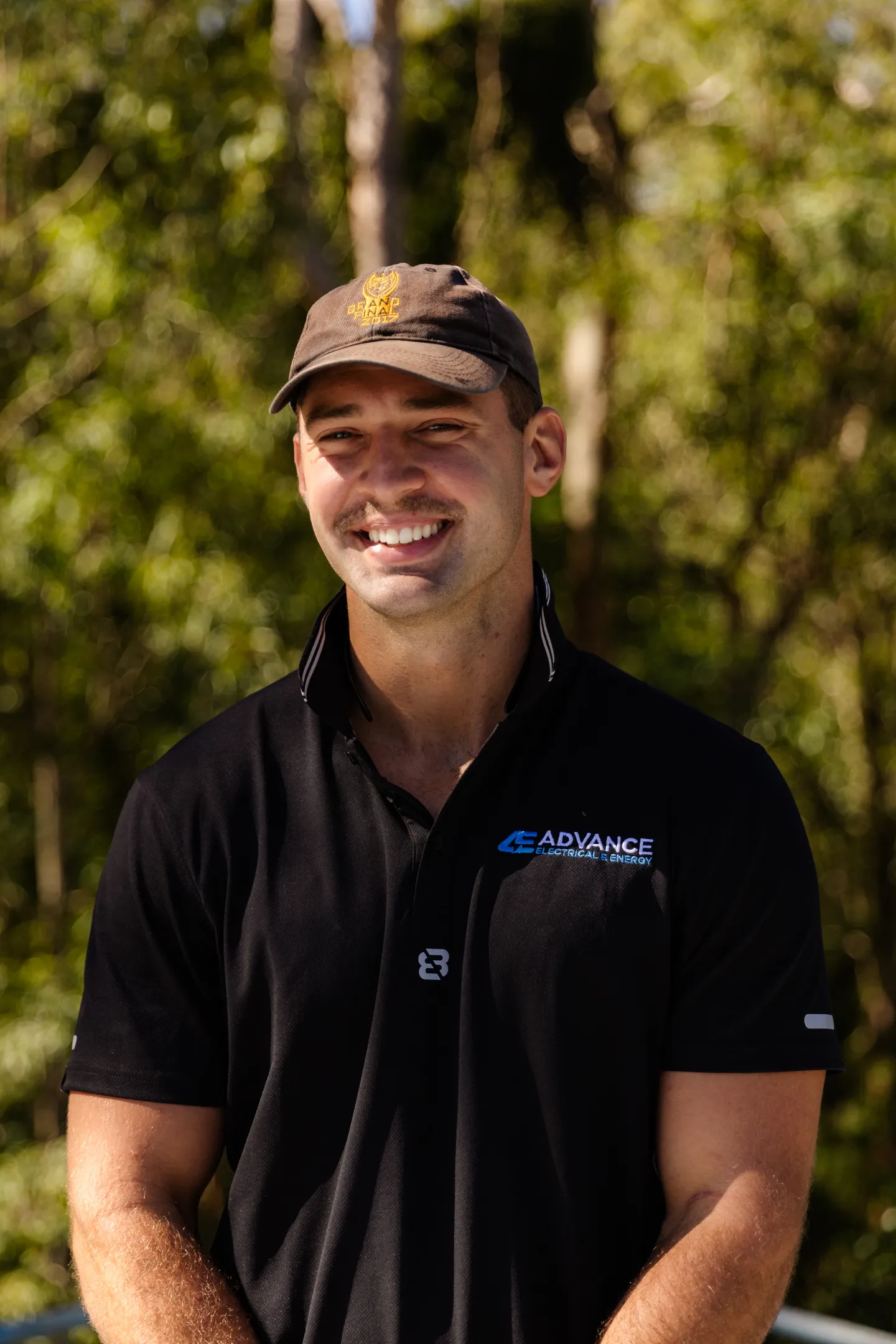
Josh is a licensed electrician who does the work himself, so the person who inspects your switchboard is the same person who upgrades it. He will tell you straight whether your board needs replacing now, can wait, or just needs a safety switch or two, and he will flag asbestos or capacity issues before they become a surprise. Get in touch to book an inspection.
Related